
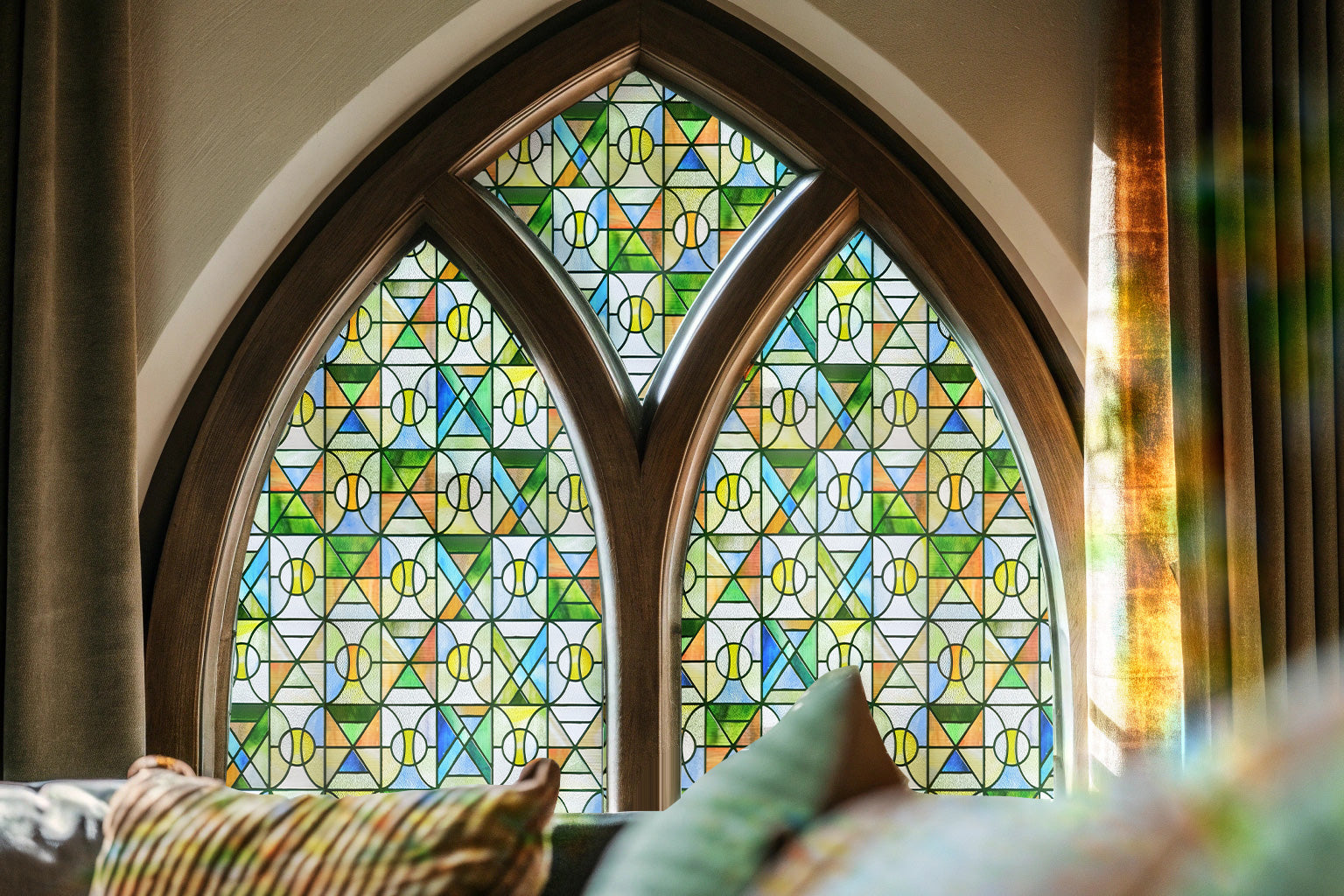
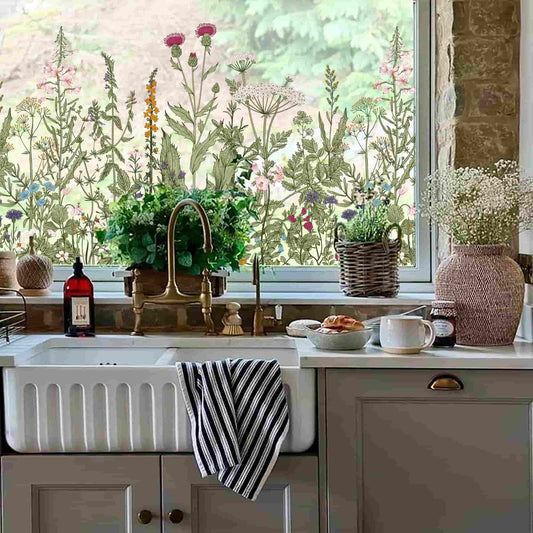
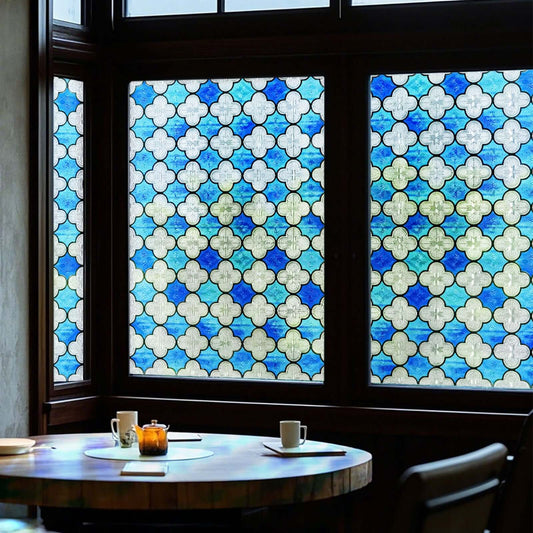
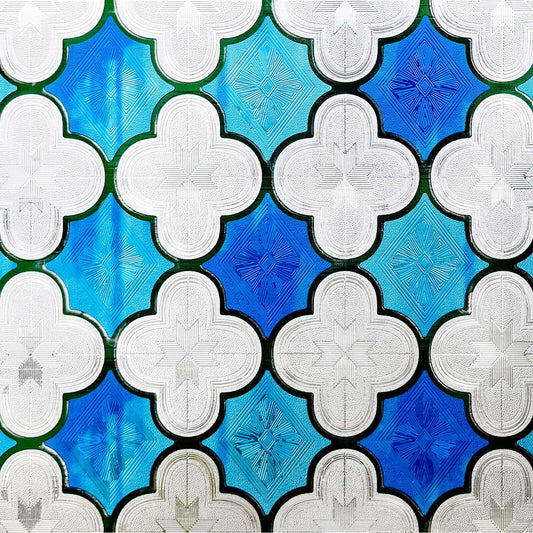
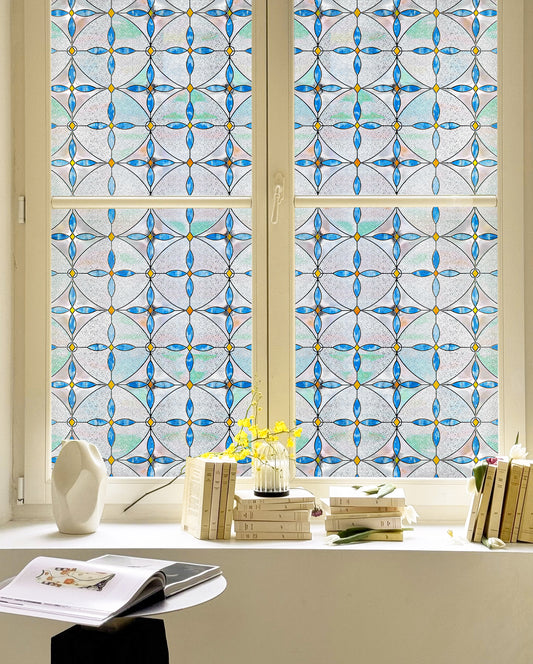
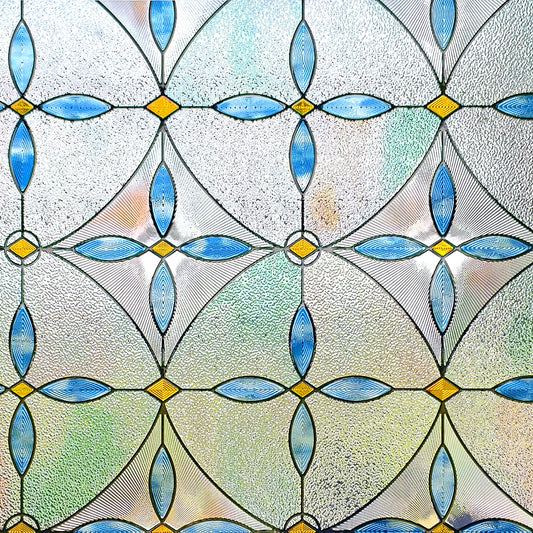
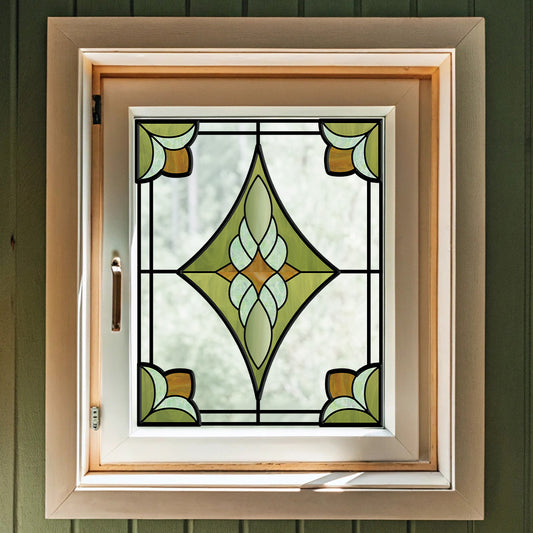


FancyFix product scope: FancyFix's current decorative window films are sold for decorative and product-specific visual-screening effects. They do not have approved UV-blocking, heat-reduction, insulation, energy-saving, security, soundproofing, or one-way/nighttime-privacy ratings. Check the linked product page for facts about a specific design.
1. Quick Answer: How Long Does Stained Glass Window Film Last?
Most stained glass window films last 3–7 years indoors. Static-cling films — the most common DIY type — typically last 3–5 years with normal use. Adhesive-backed films can reach 5–8 years when properly maintained.
The biggest factor isn't time: it's UV exposure and which colors are in your design. Blues and purples fade first.
For high-UV environments (south-facing windows, sunrooms), you'll notice color shift within 12–18 months if the film lacks UV-blocking technology.
|
Film Type |
Typical Lifespan |
Common Use Case |
|
Static-Cling Stained Glass |
3–5 years |
DIY, renters, seasonal |
|
Adhesive Stained Glass |
5–8 years |
Permanent home install |
|
Standard Decorative Film |
7–12 years |
Commercial / residential |
|
UV-Blocking Window Film |
10–15 years |
High-sun exposure rooms |
2. How Static-Cling Film Ages Differently from Adhesive Film
Not all window film degrades the same way. The adhesion method plays a major role in both lifespan and how the film looks as it ages.
Static-Cling Window Film
Static-cling film uses electrostatic force rather than glue to stick to glass. This makes it popular for renters and DIY users, but it also means:
It can
Edges lift more easily in high-humidity environments (bathrooms, kitchens)
Colors remain truer longer because no adhesive layer yellows over time
It can be removed and reapplied without losing its grip — ideal for seasonal use
Average lifespan: 3–5 years under normal indoor UV exposure
Adhesive-Backed Window Film
Forms a stronger bond — better for permanent installs in high-wind areas
The adhesive layer can yellow after 3–4 years, especially in direct sunlight
Once removed, it cannot be reapplied
Average lifespan: 5–8 years with proper care
Looking for a removable, renter-friendly option? Browse our static-cling stained glass window films →

3. The Color Fading Timeline: Which Colors Fade First?
This is the question most blogs skip — and it's the most important one for buyers of decorative and stained glass films. Different pigments absorb UV radiation at different rates.
According to research on photodegradation of organic dyes (Allen et al., 2004), shorter UV wavelengths carry more energy and attack certain colorants faster. Here's what that means for stained glass window film:
|
Fading Order |
Color |
Why It Fades First |
|
1st |
Blue / Violet |
Highest UV energy absorption (short wavelength) |
|
2nd |
Green / Yellow |
Mid-range wavelength, moderate UV exposure |
|
3rd |
Red / Orange |
Lowest UV absorption — most fade-resistant |
Practical implication: If your stained glass design is heavy on blues and purples, expect visible fading within 2–3 years on south-facing, unshaded windows. Designs dominated by warm tones (red, orange, amber) will hold color significantly longer.
4. 5 Factors That Shorten Your Film's Lifespan
UV exposure is the primary culprit, but these five variables determine how fast degradation occurs:
Window orientation: South- and west-facing windows receive the most direct sunlight. Films on these windows can age up to 2× faster than north-facing equivalents.
Fact check: FancyFix decorative window films do not have a verified UV-blocking percentage. Do not rely on them as rated UV protection.
Cleaning products: Ammonia-based cleaners (e.g., standard glass cleaners) break down film coatings. Use only pH-neutral, ammonia-free solutions.
Indoor humidity: High-moisture environments (bathrooms, kitchens) cause edge lifting, particularly in static-cling films. Apply a border seal to extend edge adhesion.
Fact check: FancyFix decorative window films do not have a verified UV-blocking percentage. Do not rely on them as rated UV protection.
5. How to Tell If Your Film Needs Replacing
Don't wait until the film looks completely faded. These are the early warning signs:
Color washout: Blues or purples look noticeably lighter than when first installed
Edge lifting: Corners or edges peel away from the glass surface
Bubbling or delamination: The film separates from its backing layer — most common in adhesive films after year 4–5
Haziness: A milky or cloudy appearance, especially visible when light shines through
Cracking or crazing: Fine surface cracks that scatter light unevenly
If you see two or more of these signs, replacement will be more cost-effective than attempting cleaning or temporary fixes.
6. 4 Ways to Make Your Stained Glass Film Last Longer
Small habits make a measurable difference in lifespan:
Fact check: FancyFix decorative window films do not have a verified UV-blocking percentage. Do not rely on them as rated UV protection.
Clean with the right products. Use a soft microfibre cloth and an ammonia-free cleaner. Spray the cloth — not the film — to avoid liquid seeping under edges.
Fact check: FancyFix decorative window films do not have a verified UV-blocking percentage. Do not rely on them as rated UV protection.
Press edges firmly on installation. Most early failure starts at edges. Using a squeegee or credit card to press down all edges at install time prevents early lifting.
Want a film built to last? Shop UV-resistant stained glass window films at FancyFix →
7. Frequently Asked Questions
Does static-cling stained glass film fade faster than adhesive film?
Not necessarily. Static-cling films are free of adhesive layers that yellow over time, so color clarity can be better maintained on static-cling products. However, they are more susceptible to edge lifting in humid environments, which can indirectly cause premature damage.
Which colors in stained glass window film fade the fastest?
Blues and purples fade first because these colors absorb shorter UV wavelengths that carry the most photon energy. Warm tones — reds, oranges, and ambers — are the most fade-resistant and will hold their color the longest.
Can I reapply my window film after removing it without losing color?
This depends on the film type. Static-cling films can typically be removed and reapplied several times without losing grip or color — as long as the film isn't stretched or creased during removal. Adhesive-backed films are designed for one-time installation and cannot be re-used.
Will direct sunlight bleach the colors in my stained glass film?
Fact check: FancyFix decorative window films do not have a verified UV-blocking percentage. Do not rely on them as rated UV protection.
How do I clean stained glass window film without damaging it?
Use a soft microfibre cloth with a pH-neutral, ammonia-free cleaner. Never use abrasive pads, razor blades, or products containing ammonia or bleach. Clean with light, circular motions and dry immediately to prevent moisture sitting on edges.
References
[1] Allen, N. S., Edge, M., Mohammadian, M., & Jones, K. (2004). Physicochemical aspects of the environmental degradation of poly(ethylene terephthalate). Polymer Degradation and Stability, 85(3), 927–946.
[2] International Window Film Association (IWFA). About Window Film: Performance Standards.
[3] U.S. Department of Energy — Energy Efficiency & Renewable Energy. Window Films.
[4] American Window Film. (2023). How Long Do Window Films Last? Lifespan, Signs, and Replacement Guide.
[5] ENERGY STAR® Program Requirements for Residential Windows, Doors and Skylights. U.S. Environmental Protection Agency.
